
Episode 5 · Upcoming
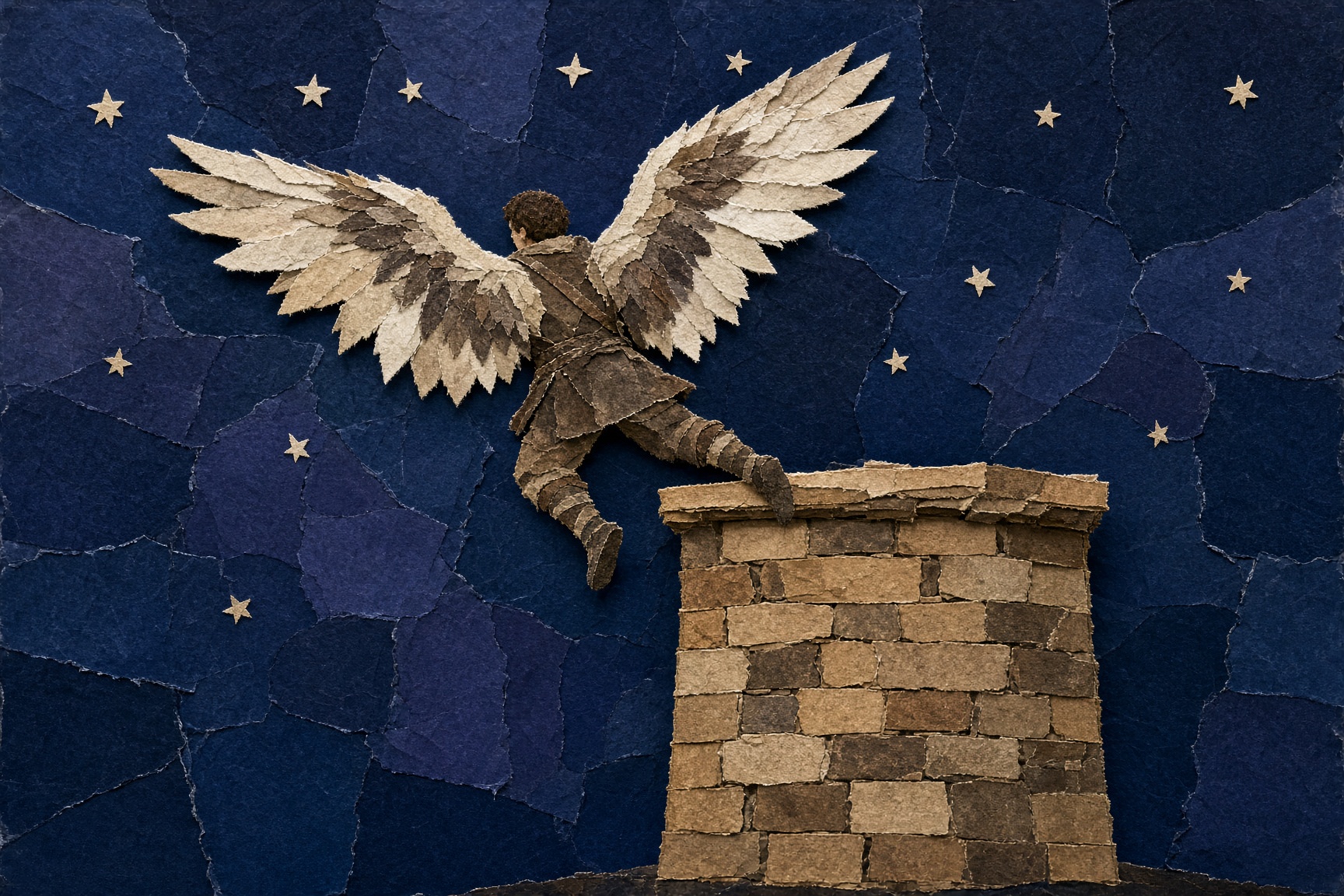
Ibn Firnas: The Man Who Jumped
Friday, December 18, 2026 · 3:00 p.m. ET / 12:00 p.m. PT
Córdoba, Spain, in the 9th century: a tower, and a landing he had not solved.
The story the channel leads with
The About text on @Discoventions begins with “a 9th-century man who leapt off a tower with feathered wings.” That man is Abbas ibn Firnas, the polymath of Córdoba, in what was then Islamic Spain. The episode is part of the world the channel has promised, not a Friday slot with a date on it yet.
More than a leap
Ibn Firnas lived from about 810 to 887. In Córdoba he was known for more than one stunt. Later writers credit him with a device that showed the motion of the planets, a water clock, and a way of making glass from local sand so Islamic Spain did not have to import the clear stuff. He was a poet and a court figure, not a mythic bird-man invented in the 20th century.
The flight, told carefully
The flight is the part that needs care. The account comes through later histories — most famously the 17th-century writer al-Maqqari, drawing on earlier Andalusian sources — not from a report filed the next morning. The story they preserve is specific: he covered himself with feathers, fitted wings, invited people to watch, and flew a real distance from a height.
He also injured his back because he had not prepared a tail, and so he could not slow the landing. Even the admiring version is not “the first airplane.” It is a controlled glide with a bad ending, attempted six centuries before Leonardo’s notebooks and a thousand years before the Wright brothers. The failure is the interesting half. He understood lift well enough to leave the tower, and not well enough to return.
Why Discoventions starts the legend here
A channel about forgotten invention could have opened on Edison. It opened, in its own words, on a man in Islamic Spain who tried a thing the sensible people in the crowd would have talked him out of. That is the editorial promise: dreamers, failures, lucky accidents, and the breakthroughs that outlived them.