
Episode 33 · Upcoming
Writing Started as Accounting, Not Words
Friday, July 2, 2027 · 3:00 p.m. ET / 12:00 p.m. PT
Before poems, the tablets are receipts.
What the trailer means
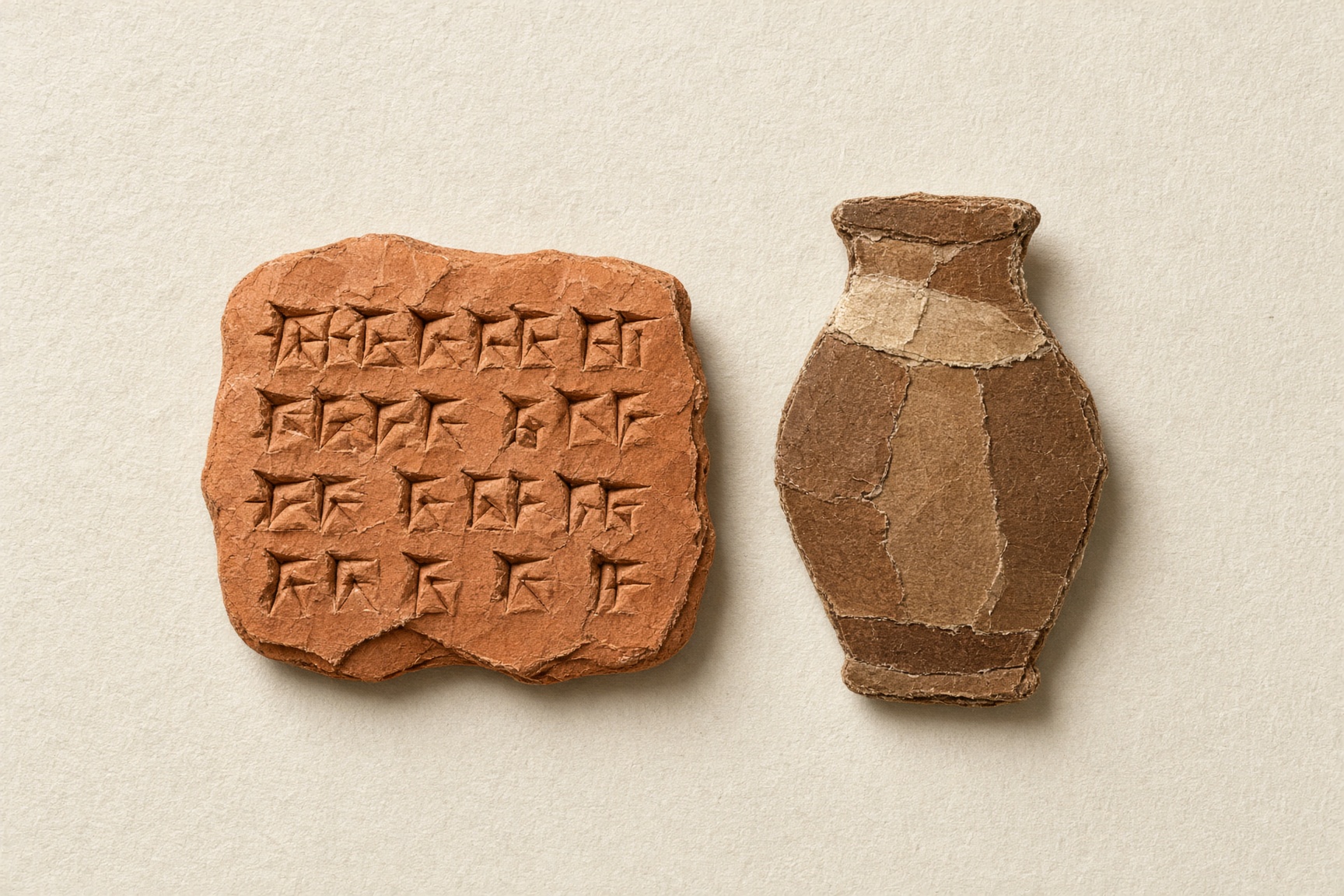
Discoventions puts it plainly: some of the oldest writing on Earth keeps track of beer. It sounds like a joke. The tablets are serious. They are how a city remembered who was owed what.
Marks before sentences
In Uruk, late in the fourth millennium BCE, scribes pressed a reed into damp clay. The signs are proto-cuneiform: numbers, commodities, titles. Many are not yet full sentences. They are lists. A city that stores barley for thousands of people cannot trust memory, and it cannot trust a single official’s word a year later.
Beer sits in the middle of that system. Brewing turned grain into a ration that workers were paid with. A jar of beer is calories, wages, and tax, all at once. When the clay says how many jars left the storehouse, it is the city’s memory.
Do not over-claim the first sentence
It is tempting to say the first sentence ever written was a beer order. That is cleaner than the evidence. The earliest tablets are mostly accounts, and beer — along with bread, sheep, and textiles — is one of the things those accounts refuse to forget. Hymns, kings, and the Epic of Gilgamesh come after the bookkeeping, once the signs can carry speech and not only inventory.
The honest version is already good enough for an episode: writing does not begin as art. It begins as a way to stop an argument about grain.
Why it still matters
Every later invention in this channel — the press, the compass, the wheel — survives because somebody wrote the result down in a form other people could check. The beer tablet is the unglamorous ancestor of that habit.